Here’s a look back at the best I read during 2022. These are roughly listed best, first; but the quality was generally so high as to make fine distinctions specious. Some comments on each follows the lists. I’ll be fleshing those out over the next few days so visit to see updates, if you like.
Also, I have to give a shout-out to my wonderful wife, who bought me most of these books last Christmas and keep me happily swamped in reading material for most of the year.
Growing up gives you a perspective that can ruin all the good things of your childhood. I’m going to comment on Back to the Future here, so if that’s an integral pillar of /your/ childhood, you might want to skip.
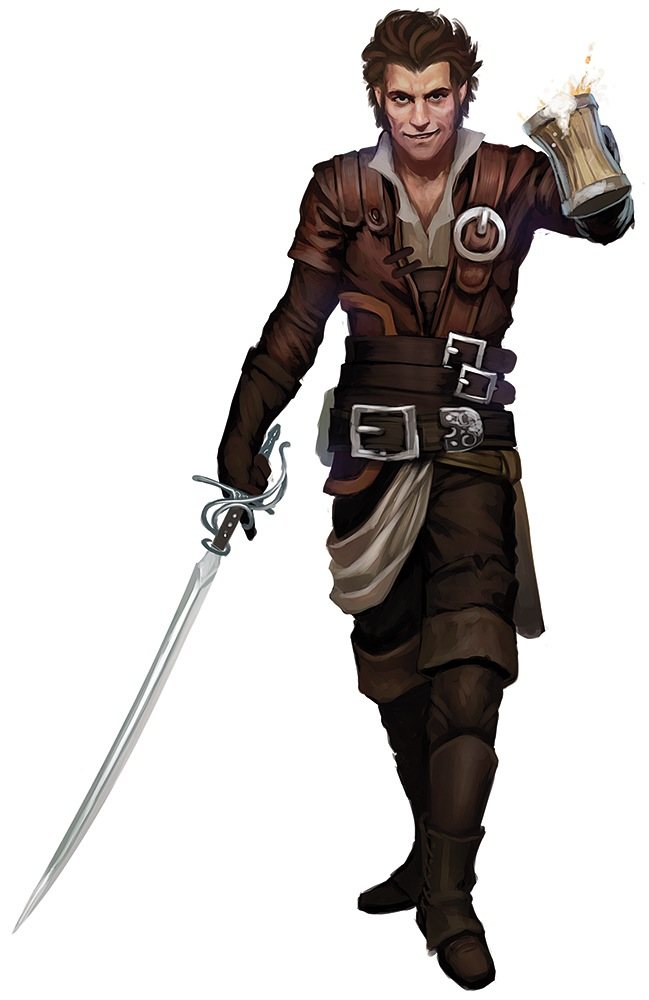
I’m steadily making spare characters for D&D 5e, partly to help me gain insight into game mechanics while I work on my Musketeers-inspired campaign, but mostly because it’s a fun exercise. I don’t usually do fighters so I thought it was time to give it a try. I’l say this: D&D 5e has finally done a good job making fighters into more than just dumb muscle.
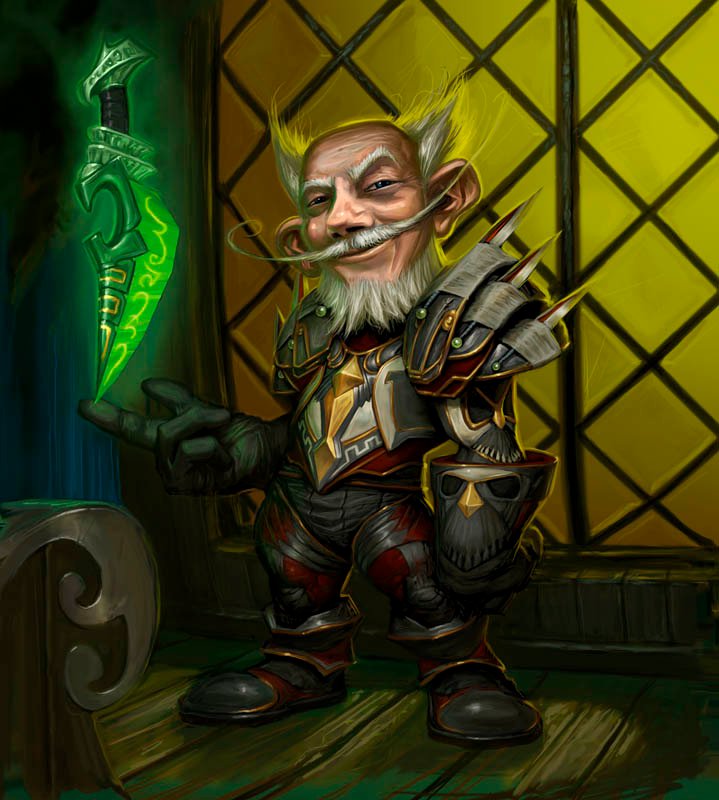
I’m getting back into D&D, hopefully, and I’m starting with Jeribon, a gnomish rogue. In the best traditions of the Internet, I’ve just stolen this image (from http://wow.blizzgame.ru/gallery/hazlow-mudshuggle-by-matt-cavotta/ ) until I can figure out one for myself.
Backstory
Jeribon was a young gnome at the time of the Sundering (ten
or so years old). His earliest memories
are of escaping the chaos and destruction by fleeing westward. He has vague, nostalgia-tinted memories of
bona fide gnomish communities, rather than the scattered and diffuse enclaves
that exist now. A lot of his memories
are sepia and warm and, he knows, probably idealized.
Jeribon was the youngest of three children. The middle child Amya (aged 35, or “teenaged”
for gnomes) did not survive the passage to the west; her absence is a chasm
between Jeribon and his oldest sibling, and was a millstone for his parents
while they lived. The eldest, Bero, had
just attained gnomish adulthood (40 years) and had been about to embark on his
own independent life when the Sundering hit.
Jeribon’s parents were middle-aged (about 150) at the time.
After some time wandering as tinkers through the west,
Jeribon’s family ended up in Ironkeep, joining the small gnomish enclave there
and offering their tinkering and inventing skills to the diverse
population. Jeribon’s mother eventually
secured a place with a minor noble and the family settled on the noble’s land a
short distance from Ironkeep. On reaching
maturity (40 years or so old), Jeribon undertook the usual gnomish rumspinga,
flitting from enclave to enclave to learn gnomish culture in the diaspora. During this time he picked up his scar and
lost his earlobe, but he doesn’t talk about it.
A couple of years later he returned to the noble’s estate
and settled in as part-time tinker and part-time archivist. He and the noble shared a minor obsession
with the written or printed word, and both enjoyed amassing a store of “wisdom”
both obscure and trivial. Bero, feeling
constrained, eventually went off on adventures and he lost track of him. Both Jeribon’s parents passed away a
half-century or so after the Sundering – somewhat sooner than the usual gnomish
lifespan. Though they had found peace
and a semblance of joy in the diaspora, the loss of the gnomish homelands had
diminished their spirits and they simply didn’t hold onto life with as much
gusto.
Jeribon remained at the estate through several more
generations. He spent most of his time
squirreled away in the family’s library (ever-increasing, if at a slow rate),
serving as archivist, librarian, and sometimes-tutor. Quick to dispense what knowledge he has
(whether you asked for it or not), Jeribon was generally regarded more with
amusement than respect, but since his role as tutor was informal and backed by
no actual power, he was remembered fondly by the various scions of the noble
family.
Alas for them, the family fortune declined with time. Almost imperceptibly, the noble line found
itself shunted aside as the Iron Confederacy stabilized, recovered, and
expanded. Their rough-hewn ideals fit
less naturally into a maturing polity.
Eventually, the line dwindled to a single female heir. When her parents died, she was foisted off on
a fosterage and the lands confiscated by ruthless, but entirely legal,
means. Jeribon found himself on the
streets. He had enough means to live
comfortably, but his beloved library (which, after all, wasn’t actually his)
was broken up and sold piecemeal.
Unimpressed by the niceties of the legalistic maneuvering,
Jeribon made off with his two favorite volumes – one, a history of the kingdoms
before the Sundering and the other, a compilation of swashbuckling fairy
tales. Although he probably could have
found a comfortable similar posting, he found himself repelled by the thought
of settling back into a nice conventional life.
He’s seen the powerful make the rules to their favor and break them
without a moment’s hesitation, and he’s decided he’s going to be a free agent
from now on. And if along the way, he
can liberate some of the ill-gotten gain from the powerful and shameless,
that’s all to the better.
This was a re-read for me, as it just became available on Kindle. It in fact wrapped up my complete re-read of Kay’s fiction, which I mostly handled in 2018.
Grant by Ron Chernow
After reading the award-winning (and musical-inspiring) Hamilton by Chernow, I was moved to pick this one up — especially after a positive review by the Grant-fanatic in my life. I’ve only read through the start of his presidency, but Chernow delivers the same unaffected but impactful style and brings his subject to life. Incidentally, there are a lot of books about the Civil War; they often neglect the western campaigns. This book covers the War, of course but its subject requires Chernow to pay attention to that part.
The Prophecy Con by Patrick Weekes
Book 2 of the Rogues Of The Republic, a follow-up to The Palace Job
The Paladin Caper by Patrick Weekes
Book 3 of the Rogues of the Republic.
Taken together, these three books are a decent if low-impact fantasy series. Intentionally or not, they have a real Leverage vibe (especially the third one), although they’re not quite as polished as John Roger’s classic TV show. Con jobs in fantasy settings are becoming more common (The Lies of Loch Lamora, the Mistborn series) but they all seem to veer into straight up combat at some point. Weekes does a decent job moving the plot along and the (huge) team of players is well-constructed, with everyone getting sharply-drawn personalities.
The Three Body Problem by Cixin Liu
The Three Musketeers by Alexander Dumas pere
Solaris Rising Vol. 2 anthology
Tales of the Dying Earth by Jack Vance
A People’s Future of the United States anthology
Ancillary Justice by Anne Leckie
A Brightness Long Ago by Guy Gavriel Kay
Raymond Chandler’s Phillip Marlowe ed. by Robert B. Parker
The Paper Menagerie and Other Stories by Ken Liu
Thrawn by Timothy Zahn
The Raven Tower by Anne Leckie
Exhalation: Stories by Ted Chiang
John Quincy Adams: Militant Spirit by James Traub
An excellent biography of the 6th President, whose term in the Oval Office was in fact one of his lesser accomplishments in the fields of diplomacy and public service.
It’s been two years since I woke up to a country I didn’t recognize, and I’ve spent a lot of time wrestling with what that means. I suspect that won’t be ending any time soon.
Over the course of this administration, my social media feeds have been peppered with reactions to outrages that were virtually unimaginable (in my bubble) before — an accelerating dash toward authoritarian or even dystopian policies and attitudes: Endorsing political violence. Calling for imprisonment without trial or even evidence. Designating a free press “the enemy of the people”. Caging children.