Category: review

Reviews of books, movies, CDs, whatever.

  • Revisiting the Undiscovered Country

    For no strong reason — perhaps I just want to relive a time that had could view its moment in history with hope — I rewatched Star Trek VI: The Undiscovered Country tonight. Although clearly of another era, it holds up pretty well. There’s more to the main story than I remembered and a lot more humor, some of it pretty ham-fisted. It’s also aggressively earnest about its end-of-Cold War message but that plays well. Star Trek, especially the original series, has never been the most subtle of works — can you say “Let That Be Your Last Battlefield“? — and, as TV Tropes likes to say, some anvils need to be dropped. If you’re going to ruminate on the end of history, or its new beginning, it behooves you to state your theses boldly.

    Released in 1991, it is (I believe) an early example of that 1990s staple, the conspiracy among nominal enemies who fear the outbreak of peace and work together to undermine it. If my recollection is correct, there were a lot of these movies. I guess everyone felt at least a little existential unease as the world order remade itself after the fall of the Soviet Union. Trek, with its long-standing expy of the Soviets handy in the Klingons, was well-positioned to make its case. As someone online commented, it’s an ironic statement: The fact that conspirators from both the Federation and the Klingons could work together so seamlessly to prevent peace, proved that the Federation and the Klingons could work together.

    I was impressed at the level of craft. The guest actors do well. David Warner projects an amazing presence that has you believing in Chancellor Gorkon despite his very limited screen time. Christopher Plummer chews the scenery as General Chang but in a grand fashion, making him of Trek’s most memorable villains. And really, having an acclaimed Shakespearean actor quoting the Bard’s greatest hits puts just the perfect bow on TOS’s well-established conceit of utilizing Shakespeare in its titles.

    But the true surprise and joy lies in the original cast. Leonard Nimoy had already brought a reserved dignity to Spock, both on TV and in the earlier movies. DeForest Kelley plays the country doctor without overplaying it, and is a very believable portrayal of someone easing into the comfortable outlines of a lived life as age advances. George Takei sells you on Sulu as captain very well; the handing off of the torch to a new generation is palpable. (In a better timeline, we’d have gotten that show with Sulu in the captain’s chair.) Even Walter Koening, Nichelle Nichols, and James Doohan get enough lines to live in their characters. Uhura, especially, has no fraks left to give during the onboard investigation and Nichols nails that no-nonsense exasperation. Kim Catrall tries so hard as Valeris, but Vulcans are hard to do well and the character is just dropped into our awareness. It would have been much more effective — and devastating — had the producers been able to line up Kirstie Alley to reprise Saavik.

    And I’m going to go on and say it, internet traditions be damned: William Shatner can act. Yes, there are moments when the caricature seems apt. But his character is the only one with a serious arc, and he rides it with professionalism and impact. Neither his initial skepticism and malice, nor his eventual renunciation of them, feels forced or unlikely. He’s a man who’s lived his life pretty sure of his moral superiority, and that self-confidence in his own virtue gets rattled pretty hard, and Shatner absolutely conveys that.

    The visual effects, it must be admitted, feel a little dated. I can’t find confirmation but I’m fairly sure that all of the space scenes are physical models. (I believe that DS9 was the first Trek to utilize CGI extensively, and not until halfway through its run.) The models are gorgeous but quite clearly models and have the too-smooth, too-clean feel of Trek physical models. Their motion is largely static. (To be clear, modern Trek has leaned too far the other way, where space scenes are overwhelming kinetic and disorienting.)

    The whole movie does feel of an earlier era. By today’s standards, the pacing is slow — not that that’s bad, actually, but modern audiences might not have the patience for it. There is a lot of talking — it is Star Trek, after all — and a mix of many genres: Some war movie, some diplomacy, a detective story, a prison movie. It’s a bit of a mash. Overall it works though. The scriptwriters do a nice job keeping the narrative flowing and transitioning from one genre to the next without it being too jarring. It helps that the actors are comfortable with their roles, and that the original show also hopped from genre to genre.

    How about the message? Well, it’s hard to disagree with the overarching “Peace is preferable to war” theme. I’m sure social historians could mine a PhD or two about how Star Trek captured that moment in American (and world) history. I was struck about how well it translated TOS’s original optimism into a 1990s form. In the 1960s, there was a presumption that the larger institutions were trustworthy and good. By the 1990s, Trek admitted that there could be some rotten fruit in paradise: Conspirators willing to lie, cheat, and murder to advance their cause — though it does feel like the conspirators are earnest in their justifications. In the early 21st century, Star Trek — like the wider culture — largely gave up on the institutions. (It’s important to note that the trope of the insane admiral, which has more or less consumed Star Trek at this point, gets its real start on Star Trek: The Next Generation. In TOS, while we encounter a handful of mad brass officers, in each case it’s a response to extreme circumstance, not a personality defect.) Getting back to The Undiscovered Country: The conspiracy is wide-ranging and includes a large number of higher-ups (including the obligatory admiral) but overall, it’s implied, the Federation’s intents are honorable and Starfleet is dependable.

    I’m not sure if it was intentional, but I really like that the ultimate solution to the threat of General Chang’s fire-capable cloaked Bird of Prey comes not from Starfleet’s military might or overwhelming force. It stems from Starfleet’s scientific mission. No one said “Let’s carry sensors for gaseous anomalies so that we can hunt cloaked ships”. It was a spinoff technology. I’m sure there are Federation bean-counters wondering why Starfleet spends so many resources on wide-ranging studies with no practical point. Defeating Chang offers a justification. You never know when, say, stellar cartography might save the Federation.

    As a coda to the original crew, the movie plays well. Everyone was clearly very aware that this would be the last outing of this group of actors (barring minor cameos), and they all invested themselves in the roles and the movie. Obviously, Star Trek continued but the Original Series ended, and this was a well-written, well-executed finale — the one the actual TV show never got.

  • BLG’s Top Reads of 2022

    Here’s a look back at the best I read during 2022.  These are roughly listed best, first; but the quality was generally so high as to make fine distinctions specious.  Some comments on each follows the lists.  I’ll be fleshing those out over the next few days so visit to see updates, if you like.

    Also, I have to give a shout-out to my wonderful wife, who bought me most of these books last Christmas and keep me happily swamped in reading material for most of the year.

    Fiction

    Non-fiction

    • How to Hide an Empire: A History of the Greater United States by Daniel Immerwahr
    • Destiny Disrupted: A History of the World Through Islamic Eyes by Mir Tamim Ansary
    • Money: The True Story of a Made-up Thing by Jacob Goldstein
    • Shady Characters: The Secret Life of Punctuation, Symbols, and Other Typographical Marks by Keith Houston 
    • The Wordhord: Daily Life in Old English by Hana Videen
    • Immune: A Journey into the Mysterious System That Keeps You Alive by Philipp Dettmer
    • Hitler’s American Gamble: Pearl Harbor and Germany’s March to Global War by Brendan Simms and Charlie Laderman
    • Papyrus: The Invention of Books in the Ancient World by Irene Vallejo
    • Who Killed Jane Stanford?: A Gilded Age Tale of Murder, Deceit, Spirits and the Birth of a University by Richard White
    • The Alchemists: Three Central Bankers and a World on Fire by Neil Irwin
    (more…)
  • Review: Altered Carbon

    {Ed. note: Another thing languishing in my Drafts for multiple years.  Maybe I thought I’d be expanding it?  Clearly I won’t, so here it is.}

    I’ve finished all of (season one?) of Altered Carbon, and have reached the conclusion that it is decidedly … adequate. It’s so-so cyberpunk and so-so noir, desperately trying to be distinct from Blade Runner while simultaneously desperately wanting to be Blade Runner.

    Spoilers below the fold.

    (more…)

  • Books 2020

    Evermore

    Paris at the End of the World

    Godsgrave

    Mythos

    Darksdawn

    Working Futures

    Bridge of Spies

    Redemption Falls

    The Secret Lives of the US Presidents

    This is How You Lose the Time War

    Cities: The First 6000 Years

    World War Z

    Middlegame

    A Brightness Long Ago (re-read)

    The Consuming Fire (re-read)

    The Last Emperox

    Star Wars: Darth Vader Vol 1: Vader (graphic novel)

    The Diamond Age (re-read)

    Murderbot 1: All Systems Read

    Murderbot 2: Artificial Condition

    A Memory Called Empire

    The Invisible Hook

    Target: Vader (graphic novel)

    Renaissance Diplomacy

    Binti

    Sixteen Ways to Defend a Walled City

  • Books 2019

    Books 2019

    A Song for Arbonne by Guy Gavriel Kay

    This was a re-read for me, as it just became available on Kindle.  It in fact wrapped up my complete re-read of Kay’s fiction, which I mostly handled in 2018.


    Grant by Ron Chernow

    After reading the award-winning (and musical-inspiring) Hamilton by Chernow, I was moved to pick this one up — especially after a positive review by the Grant-fanatic in my life.  I’ve only read through the start of his presidency, but Chernow delivers the same unaffected but impactful style and brings his subject to life.  Incidentally, there are a lot of books about the Civil War; they often neglect the western campaigns. This book covers the War, of course but its subject requires Chernow to pay attention to that part.


    The Prophecy Con by Patrick Weekes

    Book 2 of the Rogues Of The Republic, a follow-up to The Palace Job

    The Paladin Caper by Patrick Weekes

    Book 3 of the Rogues of the Republic.

    Taken together, these three books are a decent if low-impact fantasy series. Intentionally or not, they have a real Leverage vibe (especially the third one), although they’re not quite as polished as John Roger’s classic TV show. Con jobs in fantasy settings are becoming more common (The Lies of Loch Lamora, the Mistborn series) but they all seem to veer into straight up combat at some point. Weekes does a decent job moving the plot along and the (huge) team of players is well-constructed, with everyone getting sharply-drawn personalities.


    The Three Body Problem by Cixin Liu

    The Three Musketeers by Alexander Dumas pere

    Solaris Rising Vol. 2 anthology

    Tales of the Dying Earth by Jack Vance

    A People’s Future of the United States anthology

    Ancillary Justice by Anne Leckie

    A Brightness Long Ago by Guy Gavriel Kay

    Raymond Chandler’s Phillip Marlowe ed. by Robert B. Parker

    The Paper Menagerie and Other Stories by Ken Liu

    Thrawn by Timothy Zahn

    The Raven Tower by Anne Leckie

    Exhalation: Stories by Ted Chiang

    John Quincy Adams: Militant Spirit by James Traub

    An excellent biography of the 6th President, whose term in the Oval Office was in fact one of his lesser accomplishments in the fields of diplomacy and public service.

    James Madison

    The Clockwork Dynasty

    Neverwhere

    The Collapsing Empire

    The Consuming Fire

    A Wizard of Earth-Sea

    Fall, or Dodge in Hell

    The Collected Works of Arthur C. Clarke

    The Map of Knowledge

    Nevernight

    Everless

    The Fifth Season

  • Agents of SHIELD meets its “End”

    Agents of SHIELD meets its “End”

    It took only a week for me to catch the Season 5 finale of Agents of SHIELD, fittingly called “The End”. It was pretty fantastic, actually, even if it barely tied into the Avengers flick. Agents of SHIELD has been the little show that could, toiling away while the MCU bounces from spectacle to spectacle.
    Spoilers, of course.

    (more…)

  • The best thing about The Last Jedi

    I finally got to see The Last Jedi (after two previous failed attempts, both amazingly sold out afternoon shows, a month after the premier).  I liked it a lot.  My personal rankings of the “main” Star Wars movies is now something like

    1. The Empire Strikes Back
    2. Star Wars (A New Hope)
    3. The Force Awakens
    4. The Last Jedi
    5. The Return of the Jedi
    6. The Revenge of the Sith
    7. The Phantom Menace
    8. The Attack of the Clones

    But there was something that really stands out.  Spoilers ahead!

    (more…)

  • The power of the dark side

    [amazon_link asins=’0785192557,0785192565,0785199772,0785199780,0785197893′ template=’ProductCarousel’ store=’gilroy0-20′ marketplace=’US’ link_id=’0a4327d5-eb7a-11e7-a142-c169eec473c4′]

    No, this is not a political post.  🙂

    I absolutely tore through the omnibus Kindle editions of the Darth Vader comic (one of several in the rebooted Marvel line).  I guess it really paid off for Amazon to make Volume 1 free to Prime members because it hooked me fast.  I ended up buying Volumes 2 through 4 as well as the crossover event Vader Down.  Combined, they cost me about what a standard novel would, and they were well worth the money.

    Oh, spoilers below.

    (more…)

  • Lost Worlds and A Strange Visitor From Another Planet

    Lost Worlds and A Strange Visitor From Another Planet

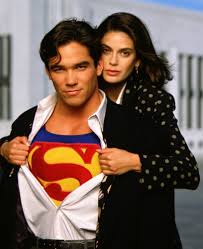
    I just re-watched the pilot of Lois & Clark: The New Adventures of Superman (1996).  It is actually pretty good, especially for a late-1990s superhero show.  It’s sly and clever, and does a nice job working around its obviously-inadequate effects budget.  There’s real chemistry between Dean Cain and Teri Hatcher, as well.  Hatcher really sells Lois Lane as a modern women, the natural progression of the character’s strong arc since her introduction.

    One thing really did stand out to me about this pilot, though, that is both endearing and maybe a little depressing.  The writers went with the “evil businessman” version of Lex Luthor that’s been common since the Crisis on Infinite Earths.  The pilot had to have Lex plotting some nefarious scheme for the sake of pure profit.  But what?

    The sabotage of the space program.

    Really.  The “Congress of Nations” is about to launch the first 100 colonists to a new space station (Prometheus).  Lex wants to blow up the launch, doom Prometheus, and replace it with Space Station Luthor.  (Of course.)  His motive is the billion-dollar patents that will flow from research done in zero-g on new drugs and treatments.  The loss of the first transport is greeted as a national tragedy.  The launch of the replacement (with the colonists) draws a viewing public all over the world, with everyone on the edge of their seats.

    That’s what I find both endearing and sad.  When was the last time our (crewed) space program elicited that sort of enthusiasm?  Heck, we can’t even launch people into space anymore.   For the writers of this show, movement forward into space was the obvious, almost inevitable mark of progress, of there being a future.  It might well be the last time popular TV treated it that way.

    And to me, that’s a little sad.  We have miracles and wonders today, of course, but somehow everything seems … small.  Musk and Bezos are slogging forward and dragging us, I suppose, but it certainly doesn’t fire the popular imagination any longer.  I hope we’re just in a holding pattern, waiting for the technology to meet its potential, but I don’t know.

    (By the way, Superman — of course — foils the sabotage and lifts the transport into orbit himself.  Because, hey, Superman.)